When dealing with biohazards such as sewage backups, crime scenes, or hazardous waste proper safety precautions are critical. Biohazard cleanup isn’t just about removing contaminants; it’s about ensuring that those performing the cleanup and those living in the affected space are protected from potential health risks. Whether you’re a homeowner facing a biohazardous situation or a professional tasked with the cleanup, understanding how to safely handle the situation can prevent injury, illness, and long-term health consequences. At GTARestoration.ca, we specialize in safe and effective biohazard cleanup services. In this post, we’ll outline essential safety tips for protecting yourself during biohazard cleanup.
What is Biohazard Cleanup?
Biohazard cleanup refers to the process of removing and sanitizing materials that are contaminated by biological substances. These can include bodily fluids, blood, sewage, and other pathogens that pose a risk to human health. Biohazards are often found in situations such as:
- Crime Scenes: Blood, bodily fluids, or other hazardous materials from violent incidents.
- Sewage Backups: Raw sewage that can contain dangerous bacteria, viruses, and parasites.
- Infectious Disease Contamination: Areas that have been exposed to viruses, bacteria, or fungi, such as a home where someone had a contagious disease.
- Trauma Scenes: Areas affected by accidents, including blood and bodily fluids.
Because biohazard cleanup often involves hazardous materials that are invisible to the naked eye, it’s essential to approach it with caution. Whether you’re cleaning up yourself or hiring professionals, you should follow strict safety protocols.
1. Wear the Right Protective Gear
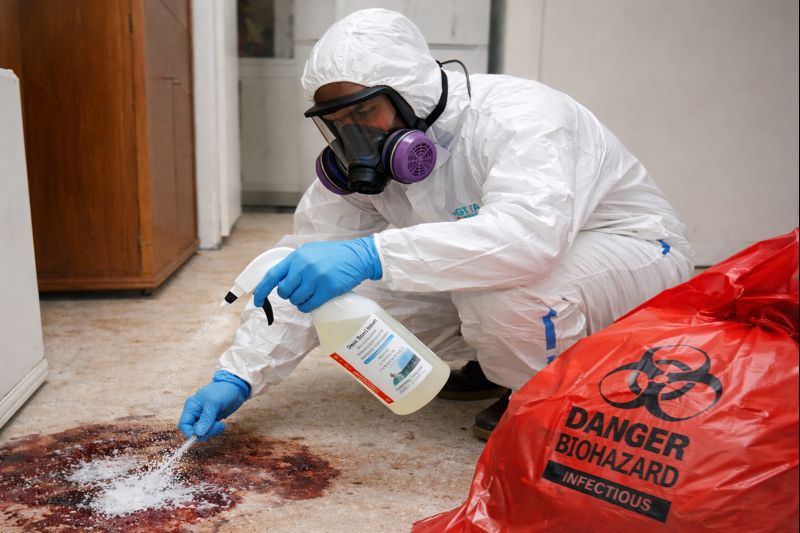
Proper protective gear is your first line of defense against biohazard exposure.
Essential Protective Gear:
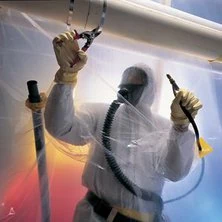
- Personal Protective Equipment (PPE): A full suit (like a Tyvek suit or hazmat suit) to cover the entire body and prevent contamination.
- Gloves: Heavy-duty gloves (latex or nitrile) to prevent skin contact with hazardous materials.
- Face Shield/Respirator: For protecting your face, eyes, and respiratory system from airborne contaminants. A full-face shield or a respirator mask with a filter designed for biohazards (such as an N95 mask) is essential.
- Boot Covers: Disposable covers to protect your shoes from contamination and avoid tracking hazardous materials throughout the area.
If you’re cleaning up a hazardous spill in a confined space, additional equipment may be necessary, such as a self-contained breathing apparatus (SCBA), which supplies clean air to protect you from toxic fumes and particles.
2. Ensure Proper Ventilation
When dealing with biohazard cleanup, ventilation is essential to minimize the spread of airborne pathogens and toxins.
- Open Windows: If possible, open windows to allow fresh air to circulate through the space.
- Use Fans: Place fans strategically to direct airflow away from you and toward open windows or vents.
- Air Scrubbers: In more severe cases, you may need a HEPA air scrubber, which filters the air of contaminants. These are particularly useful in areas with heavy contamination.
Proper ventilation can help reduce the concentration of harmful substances in the air and make the environment safer for both cleanup workers and residents.
3. Follow Proper Disinfection Procedures
Simply removing visible contamination is not enough in biohazard cleanup. To ensure the space is truly safe, proper cleaning and disinfection must follow. This process involves thorough cleaning and sanitizing with disinfectants designed to kill pathogens.
- Use EPA-Approved Disinfectants: Always use disinfectants that are certified by the Environmental Protection Agency (EPA) for killing biohazards like viruses, bacteria, and fungi.
- Sanitize All Affected Surfaces: Disinfect all surfaces that came into contact with biohazards, including walls, floors, and furniture.
- Use Proper Disposal Methods: Biohazardous materials must be disposed of in sealed, labeled containers that comply with local regulations. Never throw contaminated materials in regular trash bins.
Professional biohazard cleanup technicians are trained to follow these procedures, ensuring thorough decontamination of all affected areas.
4. Avoid Direct Contact with Contaminants
It’s easy to overlook contamination when you’re focusing on removing debris or disinfecting a surface.
- Don’t Touch Contaminated Materials: Avoid touching contaminated materials with bare hands. Even if you’re wearing gloves, make sure you dispose of them properly after the cleanup.
- Use Tools to Remove Debris: Use tools like scoops, brushes, or absorbent materials (such as towels or mops) to remove solid debris.
- Stay Calm and Avoid Panic: Stress can cause you to overlook safety procedures. Remain focused, follow protocols, and take breaks as needed to avoid becoming overwhelmed.
If you’re cleaning a larger area, break it down into manageable sections, focusing on one spot at a time to ensure complete safety.
5. Decontaminate After Cleanup
Once the area is cleaned and decontaminated, it’s crucial to thoroughly clean your own clothing and equipment. Contaminated items must be disposed of, and you should also disinfect your shoes, gloves, and other gear.
- Remove PPE Carefully: When removing your protective gear, take care to avoid touching any contaminated surfaces. Peel gloves off from the wrist and avoid touching the outer surface.
- Shower and Clean Up: After finishing the cleanup, immediately wash your hands and body thoroughly to remove any potential contaminants. A full shower is recommended, especially if you’ve worn a hazmat suit.
Once you’ve removed your gear, dispose of it in designated biohazard bags. If you’re unsure about any part of the cleanup process, contact a professional team to ensure that everything is handled properly.
Conclusion
Biohazard cleanup can be a daunting and dangerous task, but by following essential safety protocols, you can protect yourself from the health risks involved. From wearing the right protective gear to ensuring proper disposal of contaminated materials, these steps will help you safely handle biohazard situations. At GTARestoration.ca, we specialize in biohazard cleanup, offering expert services to ensure that your home or business is returned to a safe, healthy state.